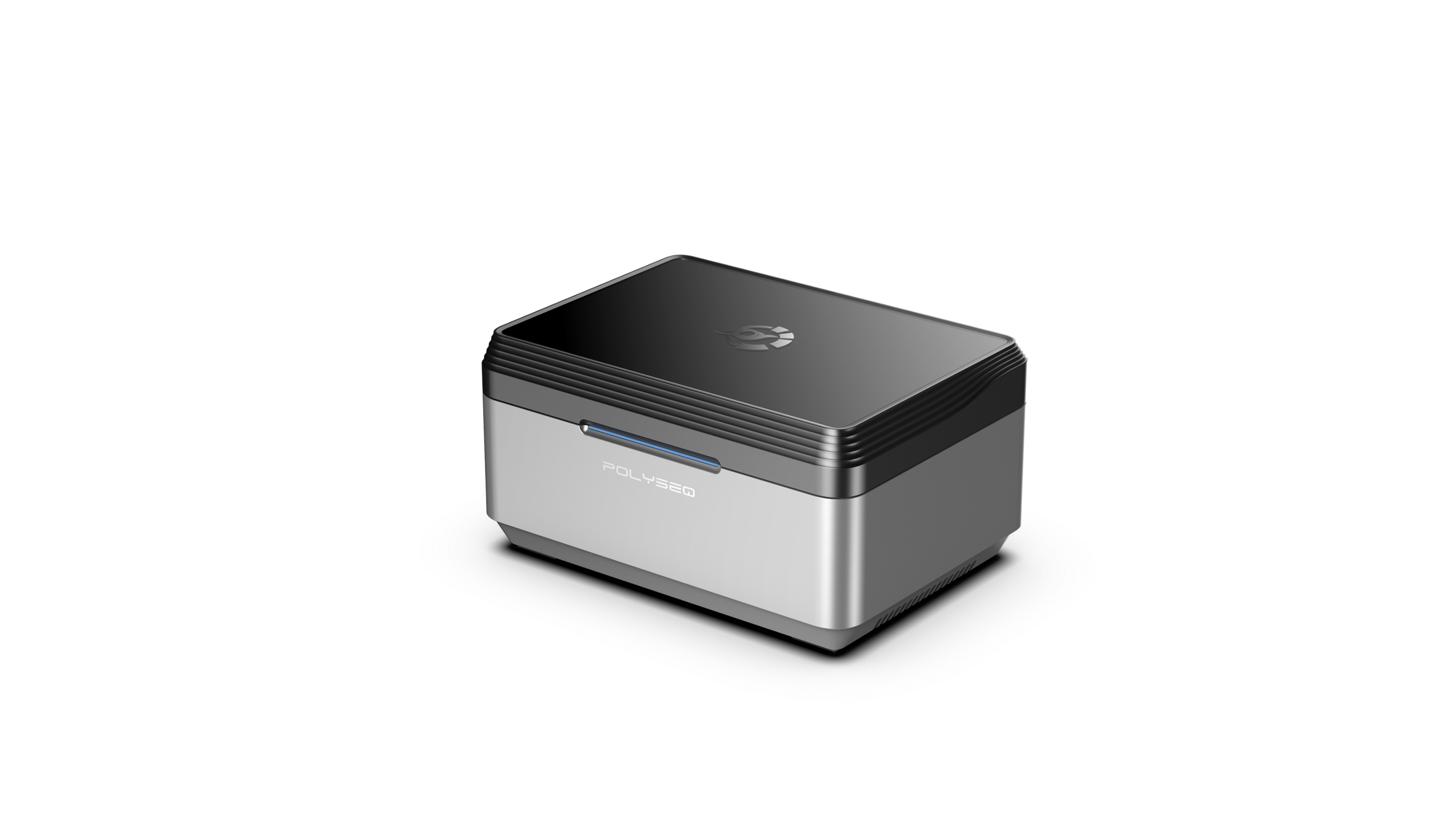
Long-Read Sequencing Direct RNA Direct Methylation

Nanopore Sequencing Platform

Next-Generation Long-Read Sequencing for Multi-Dimensional Molecular Profiling

Unlocking the full spectrum of molecular information — from DNA sequence to RNA quantification, structural variation, and epigenetic modification, all in a single platform.

Nanopore Sequencing Platform

Sequencing Principle

How Nanopore Sequencing Works

Biological Nanopore

A biological nanopore protein is fixed in an insulating polymer membrane. As nucleic acid single strands pass through the pore, characteristic current changes are recorded — enabling direct sequencing.

C2.0 Chemistry

Revolutionary new nanopore protein combined with motor protein for controlled strand speed. Dramatically reduces analytical redundancy and improves clinical accessibility.

Real-Time Analysis

Sequence and analyze in real time — no need to wait for the entire run to complete. Get actionable insights as soon as sufficient data coverage is achieved.

Simplified Principle Diagram

DNA

DNA/RNA

Nanopore

Current Signal

A/C/G/T

Base Calling

Direct electronic sensing — no optics, no cameras, no chemistry enzymes required beyond the motor protein

Key Metrics

Platform Performance at a Glance

≥99%

Raw Accuracy (Q20)

200+

IP Achievements

150+

Product Deliveries

10 yrs

R&D → Production

Core Advantages

Four Pillars of the Nanopore Platform

Ultra-Long Read (MB-Level)

MB-level read lengths span entire genomic regions that short-read technologies cannot resolve. Enables confident detection of complex structural variations and full-length transcripts.

  • SV detection: Short-read NGS sensitivity for >50bp SVs is only 30–50%; Nanopore reaches 90%+
  • Full-length transcript detection: Resolve complete RNA isoforms without assembly
  • Applications: ALK/ROS1/RET fusion validation, BRCA1/2 large fragment rearrangement

Direct RNA Sequencing

No reverse transcription and no PCR amplification needed. Eliminate amplification bias entirely. Directly detect and quantify RNA while preserving the most native biological information.

  • PD-L1 mRNA quantification for immunotherapy response prediction
  • Fusion gene transcript validation: Confirm whether gene fusions are transcribed into functional RNA
  • RNA modification detection: Direct detection of m6A, m5C without chemical conversion

Direct 5mC Methylation Detection

No bisulfite conversion needed — avoiding DNA damage and enabling simultaneous genome sequence + methylation profiling at single-molecule resolution.

  • Tumor methylation subtyping: Provide novel classification dimensions beyond genomics
  • Liquid biopsy ctDNA methylation: Breakthrough approach for non-invasive cancer detection
  • Brain tumor ROBO1 framework classification via methylation profiling

Reusable Flow Cells

Innovative chip cleaning kit design enables flow cell reuse across multiple runs, significantly reducing the per-sample sequencing cost and making high-quality sequencing economically accessible.

  • Multi-run flow cell reuse protocol reduces per-run cost substantially
  • Validated cleaning protocol maintains sequencing quality across runs
  • Supports high-frequency clinical testing scenarios without prohibitive per-run costs

Product Portfolio

Three Products for Every Scale

NanoPoreOne

Portable / POCT

Compact and portable, designed for field deployment and point-of-care settings. Perfect for rapid molecular profiling in non-traditional laboratory environments.

Portability★★★★★
ThroughputLow-Medium
Use CaseField / POCT
ReusableYes
CLINICAL STANDARD

NanoPoreX2

Six-Channel Clinical Routine

Six independent channels enable simultaneous processing of multiple samples or conditions. Designed for daily clinical routine and clinical trial laboratory use.

Portability★★★★☆
ThroughputMedium
Use CaseClinical Routine
ReusableYes

NanoPoreHive

High-Throughput Central Lab

High-throughput platform delivering up to 800GB of sequencing data per run. Designed for centralized laboratory deep sequencing and comprehensive molecular profiling.

Portability★★☆☆☆
Throughput800GB/run
Use CaseCentral Lab
ReusableYes

Multi-Dimensional Biomarkers

Four Biomarker Dimensions in One Platform

Unlike single-technology platforms, the Nanopore platform simultaneously captures four independent molecular dimensions — enabling comprehensive characterization impossible with any single other technology.

1

RNA Quantification & Transcriptome

DNA → RNA

Direct RNA sequencing without reverse transcription or PCR amplification eliminates amplification bias entirely.

Full-length transcript detection: Resolve complete RNA isoforms and accurately distinguish between splice variants (isoforms).

Key Applications:

  • • PD-L1 mRNA quantification for immunotherapy patient selection
  • • Fusion gene transcript validation — confirm whether fusions are transcribed
  • • Immunotherapy response prediction through immune gene expression profiling
  • • New drug target identification via differential splicing analysis
2

Structural Variation (SV) Detection

Large-Scale Genomic Rearrangements

Long reads (MB-level) span complex rearrangements, large deletions/insertions, and inversions that short reads miss entirely.

Critical finding: Short-read NGS sensitivity for detecting SVs >50bp is only 30–50%; Nanopore long reads can achieve 90%+.

Key Applications:

  • • ALK/ROS1/RET fusion full-length validation
  • • BRCA1/2 large fragment rearrangement detection
  • • Complex chromosomal translocation characterization
  • • Copy number variation (CNV) detection with breakpoint precision
3

Methylation Analysis (Epigenetic CDx)

Direct 5mC Detection — No Bisulfite

Direct detection of 5mC methylation without bisulfite conversion — avoiding DNA damage and simultaneously obtaining genome sequence + methylation map at single-molecule resolution.

Bisulfite-free advantage: Bisulfite treatment degrades 84–96% of DNA; Nanopore avoids this entirely, enabling analysis of low-input and degraded clinical samples.

Key Applications:

  • • Tumor methylation subtyping — new classification dimension beyond genomics
  • • Liquid biopsy ctDNA methylation markers for non-invasive cancer detection
  • • Brain tumor ROBO1 framework classification
  • • Early cancer detection from blood samples (epigenetic biomarkers)
4

RNA Modification Detection

Epitranscriptomics — m6A, m5C and Beyond

Direct detection of m6A, m5C, and other RNA modifications without chemical conversion — preserving the most native biological information and providing entirely new diagnostic dimensions.

Novel CDx frontier: RNA modifications represent the next frontier of companion diagnostics — enabling characterization beyond simple nucleotide sequence to functional RNA state.

Key Applications:

  • • Novel RNA modification biomarker discovery for next-generation CDx
  • • Epitranscriptomic profiling of tumor vs. normal tissue
  • • RNA modification dynamics in drug response and resistance
  • • m6A modification patterns as predictive biomarkers

Clinical Applications

Multi-Cancer Molecular Profiling

Cancer Type Nanopore Extended Capability Corresponding Targeted Therapies
Non-Small Cell Lung Cancer Full-length ALK/ROS1/RET fusion transcripts, methylation subtyping, resistance mechanism characterization (T790M, C797S) Osimertinib, Alectinib, Brigatinib, Lorlatinib, Pralsetinib, Selpercatinib, etc.
Colorectal Cancer MSI status, HER2 amplification, NTRK fusion, methylation-based classification, KRAS/RAF variant phasing Cetuximab, Panitumumab, Sotorasib, Encorafenib+Cetuximab, Larotrectinib, etc.
Thyroid Cancer TERT promoter methylation, full-length fusion transcript validation, RAS variant phasing Selpercatinib, Pralsetinib, Dabrafenib+Trametinib, etc.
Pancreatic Cancer BRCA1/2 large fragment rearrangement, SMAD4 deletion, structural variation, methylation profiling Olaparib (maintenance), Erlotinib, Nab-paclitaxel+Gemcitabine, etc.
Breast Cancer (Developing) HER2 amplification validation, BRCA1/2 structural variation, PIK3CA mutation phasing, immune gene expression Trastuzumab, Pertuzumab, Olaparib, Alpelisib, etc.
Hematologic Malignancies (Developing) Chromosomal translocation full-length validation, T-cell receptor repertoire, methylation classification Imatinib, Dasatinib, Midostaurin, Ivosidenib, Venetoclax, etc.

Technical Specifications

Platform Specifications

Parameter Specification
Read LengthMB-level ultra-long reads
Raw Accuracy≥99% (Q20, C2.0 chemistry)
Analysis ModeReal-time — sequence and analyze as you go
Direct RNA SequencingSupported — no RT or PCR required
Direct 5mC MethylationSupported — no bisulfite conversion
Structural VariationExcellent — >90% sensitivity for >50bp SVs
Methylation DetectionDirect, single-molecule resolution, no bisulfite
Flow Cell ReusabilitySupported via cleaning kit protocol
Regulatory StatusNational Key R&D Program Support

Dual-Platform Synergy

Integration with PCR POCT Platform

🔍

PCR POCT — Fast Screening

Rapid, automated testing for known mutations. 3–4 hours enables same-day clinical decisions.

30 min – 4 hours
🧬

Nanopore — Deep Profiling

Long-read multi-omics: RNA, SV, methylation, modification. Full molecular characterization.

1–3 days

From "Single-Gene Testing" to "Full Molecular Profile"

The dual-platform approach covers the entire CDx spectrum: PCR POCT provides rapid screening for known biomarkers to accelerate enrollment, while Nanopore delivers multi-dimensional molecular profiling including RNA quantification, structural variation, and epigenetic analysis. Together, they transform CDx from sequential single-gene tests into a comprehensive molecular characterization workflow.

Learn About PCR POCT Platform →

Explore the Power of Long-Read Sequencing

Contact us to discuss collaboration opportunities, technical profiles, or research partnership.

Email: inquiry@novobaybio.com